
introduction
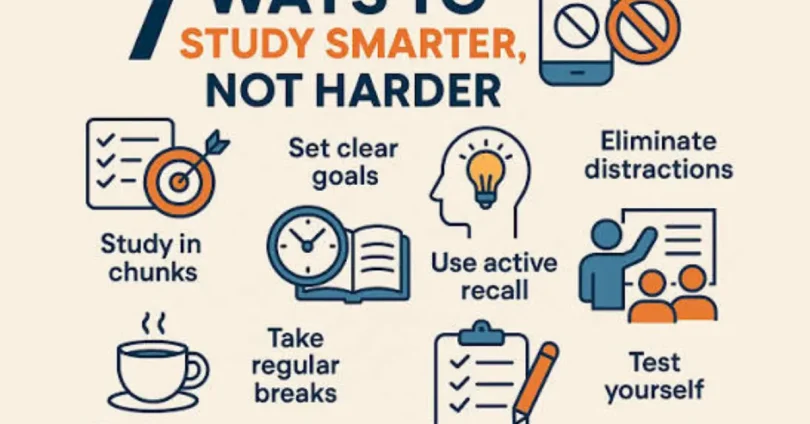
Effective study guides for students help learners organize information, understand difficult concepts, remember important facts, and prepare for exams with greater confidence. A well-designed study guide turns large amounts of information into clear, manageable sections that are easier to review and practice. Whether you are in school, college, or university, the right study guide can make your study sessions more productive.
Students often spend hours reading textbooks and highlighting notes without knowing how much they have actually learned. A structured study guide offers a better approach by combining summaries, important concepts, practice questions, examples, and revision strategies in one place.
This article explains how to create and use effective study guides, which study methods work best, how to prepare for exams, and which common mistakes students should avoid. You will also discover practical examples and simple strategies that can fit different learning styles, subjects, and academic goals.
What Are Effective Study Guides for Students?
Effective study guides for students are organized learning resources that summarize important information and help learners review, understand, and recall what they have studied. They may include short notes, definitions, diagrams, flashcards, practice questions, formulas, or chapter summaries.
Unlike a textbook, which usually explains a topic in detail, a study guide focuses on the most important information a student needs to understand and remember.
For example, a biology study guide about the human heart might include the main parts of the heart, their functions, a labeled diagram, and practice questions about blood circulation. This makes it easier to review the topic without rereading an entire chapter.
A useful study guide should have three main qualities:
- Clear organization: Information is divided into topics and subtopics.
- Active practice: Questions and exercises help students test their understanding.
- Easy revision: Key facts, concepts, and examples can be reviewed quickly.
The goal is not simply to make shorter notes. It is to create a resource that helps you learn the material and identify what you still need to practice.
Why Are Study Guides Important for Academic Success?
Study guides support academic success by giving students a structured way to learn, revise, and check their progress. They can reduce unnecessary repetition, highlight knowledge gaps, and make exam preparation easier to manage.
1. They Make Complex Topics Easier to Understand
Some subjects contain long explanations, unfamiliar terminology, or several connected concepts. A study guide breaks this information into smaller sections.
For example, a student studying mathematics can organize a chapter into formulas, worked examples, problem-solving steps, and common errors. This structure makes the material easier to follow.
2. They Improve Information Recall
Reading the same information repeatedly can create a feeling of familiarity without proving that you can remember it independently.
Study guides become more useful when they include questions that require you to recall information without looking at the answers. This process is known as active recall.
A student studying history might close the notes and answer questions such as:
- What caused the event?
- Which people were involved?
- What were the major consequences?
- How did the event influence later developments?
Answering from memory helps reveal which details are understood and which need further review.
3. They Support Better Time Management
A clear study guide helps students decide what to study first and how to divide a large syllabus into manageable tasks.
Instead of spending an entire evening on one chapter, a student can plan shorter sessions for definitions, difficult concepts, practice problems, and revision.
This is particularly helpful during busy academic periods when several assignments and exams are scheduled close together.
4. They Encourage Independent Learning
Study guides allow students to review topics without always depending on a teacher, tutor, or classmate.
When a guide includes explanations, examples, and practice questions, students can identify problems independently and seek additional help where necessary.
However, a study guide should support textbooks, class materials, and reliable educational resources rather than replace them completely.
What Should an Effective Study Guide Include?
An effective study guide includes the essential information students need to understand a topic, practice relevant skills, and evaluate their learning.
The exact format depends on the subject. A science guide may require diagrams and processes, while a literature guide may focus on themes, characters, and textual evidence.
Essential Elements of a Good Study Guide
Key concepts and definitions
List the most important terms and explain them in simple language. Include examples when a definition alone is not enough.
Chapter summaries
Summarize the main ideas in your own words. Keep each summary focused on the information needed to understand the topic.
Important formulas and rules
For mathematics, physics, and chemistry, include relevant formulas, the meaning of each variable, units where appropriate, and an example showing how to use them.
Practice questions
Add questions that test understanding rather than only memorization. Include a mix of short-answer questions, multiple-choice questions, and longer problems where relevant.
Visual explanations
Use diagrams, charts, timelines, flowcharts, or concept maps when they make relationships between ideas easier to understand.
Common mistakes
Record confusing concepts, incorrect answers, and errors you tend to repeat. Reviewing these mistakes helps you focus on areas that need improvement.
Revision checklist
Create a checklist of the topics you need to understand before an exam. Mark each topic as you become confident with it, and return to items you cannot explain or answer correctly.
How to Create an Effective Study Guide Step by Step
Creating an effective study guide does not require expensive software or complicated techniques. You can start with a notebook, a document on your computer, or a simple digital note-taking application.
Follow these seven steps to build a study guide that fits your subject and learning goals.
Step 1: Identify Your Learning Objectives
Begin by deciding what you need to learn. Check your syllabus, textbook chapter objectives, teacher’s instructions, and class notes.
Turn broad topics into specific learning goals.
For example, instead of writing “Study chemistry,” create objectives such as:
- Define acids and bases.
- Explain the pH scale.
- Identify common examples of acids and bases.
- Solve basic pH-related questions where required by the syllabus.
Specific goals make it easier to measure your progress.
Step 2: Gather Reliable Study Materials
Collect the resources relevant to your course before writing your guide. These may include textbooks, lecture notes, worksheets, assignments, revision sheets, and official course materials.
Use the syllabus or teacher’s guidance to confirm which topics are relevant to your assessment. Do not assume that every detail found online will be included in your exam.
For unfamiliar concepts, consult reliable educational sources and compare explanations when necessary.
Step 3: Organize Information Into Sections
Arrange your notes using a clear hierarchy of headings and subheadings.
For example, a geography study guide about climate could contain:
- Definition of climate
- Weather versus climate
- Factors affecting climate
- Major climate types
- Climate diagrams
- Practice questions
This organization makes individual topics easier to locate and revise.
Step 4: Summarize Information in Your Own Words
Read a small section, identify its main idea, and explain it without copying the original paragraph word for word.
Keep important terminology and technical definitions accurate. If a concept is difficult, add a simple explanation or a practical example.
For instance, instead of copying a lengthy explanation of evaporation, write that evaporation occurs when particles at the surface of a liquid gain enough energy to enter the gas state.
A useful summary should be concise without removing information necessary for understanding.
Step 5: Add Active Recall Questions
Turn your notes into questions that you can answer without looking at the material.
For example:
| Study note | Practice question |
|---|---|
| Plants use light energy during photosynthesis. | What is the role of light in photosynthesis? |
| The heart pumps blood through the circulatory system. | What is the main function of the heart? |
| A noun names a person, place, thing, or idea. | What is a noun? Give three examples. |
Write answers separately or place them under a section you can hide while practicing.
Step 6: Include Examples and Visuals
Examples show how a concept works in practice. Visuals can make complicated relationships easier to follow.
A mathematics guide may include a worked equation. A history guide may contain a timeline. A computer science guide may use a flowchart to explain an algorithm.
Choose visuals that explain something meaningful instead of adding decoration that takes time to create but does not improve understanding.
Step 7: Test and Update Your Guide
Use your finished guide to answer questions without looking at the notes. Check your responses against reliable materials and correct any errors.
Update the guide when you discover missing information, misunderstand a concept, or receive feedback from your teacher.
A study guide should develop as your understanding improves. It does not need to be perfect before you begin using it.
Best Study Methods to Use With Study Guides
Study guides work best when combined with learning techniques that require students to retrieve information, revisit it over time, and apply it to different problems.
Active Recall
Active recall means trying to remember information without immediately checking the answer.
You can practice it by using flashcards, answering questions, explaining a concept from memory, or writing everything you remember about a topic before reviewing your notes.
For example, read a page about the causes of a historical event, close the book, and list the main causes. Then compare your answer with the original material.
This method helps you identify the difference between information you recognize and information you can actually recall.
Spaced Repetition
Spaced repetition involves reviewing information across multiple sessions rather than concentrating all revision into one long session.
You might review a topic on the day you learn it, revisit it the following day, and test yourself again several days later. The exact schedule should depend on the difficulty of the material, your current level of understanding, and the time remaining before your assessment.
A practical revision schedule could look like this:
| Review session | Suggested activity |
|---|---|
| First session | Learn the concept and create notes |
| Next day | Test yourself without notes |
| Three days later | Review difficult questions |
| One week later | Complete a short practice test |
| Before the exam | Review mistakes and key concepts |
This is an example, not a fixed scientific rule. Adjust the intervals according to how well you remember the material.
The Pomodoro Technique
The Pomodoro Technique divides work into focused intervals separated by short breaks. One common version uses 25 minutes of focused work followed by a five-minute break.
During a study interval, choose one specific task, such as completing five practice problems or reviewing a set of vocabulary terms.
After several intervals, take a longer break if needed.
The method can help students who struggle to begin studying or maintain concentration. However, the ideal session length varies, and demanding tasks may require longer periods of uninterrupted work.
The Feynman Technique
The Feynman Technique involves explaining a concept in simple language as if you were teaching someone who has never studied it.
Choose a topic, explain it without relying heavily on your notes, and identify any parts you cannot explain clearly. Return to your materials to fill those gaps, then try again.
For example, if you cannot explain how electricity flows through a simple circuit without reading your notes, revisit the relevant concepts before moving to more advanced problems.
This technique is useful for identifying shallow understanding and confusing explanations.
Practice Testing
Practice testing involves answering questions under conditions similar to those you expect in an assessment.
Use textbook exercises, teacher-provided worksheets, previous papers when available, and questions you create yourself.
After completing a test, review every incorrect answer. Understanding why an answer was wrong is often more valuable than simply checking the final score.
Different Types of Study Guides for Students
There is no single study guide format that works equally well for every subject. Choose a format that matches the information you need to learn.
Summary Study Guides
Summary guides condense a chapter into its most important ideas, definitions, and examples.
They work well for reviewing broad topics in subjects such as biology, history, business studies, and geography.
Keep summaries short enough to review efficiently, but retain the details needed to understand the subject accurately.
Flashcard Study Guides
Flashcards display a question or prompt on one side and the answer on the other.
They are especially useful for vocabulary, definitions, dates, formulas, terminology, and short factual questions.
For better results, make each card focus on one clear question. Avoid placing an entire chapter on a single card.
Visual Study Guides
Visual guides use diagrams, charts, timelines, and concept maps to represent information.
They can help students understand sequences, categories, relationships, and processes.
For example, a concept map can show how different parts of an ecosystem interact, while a timeline can arrange historical events in chronological order.
Question-and-Answer Guides
These guides organize material around likely questions and their answers.
They are helpful when students need to prepare for written examinations, oral assessments, or structured classroom tests.
Write questions that require explanation and application, not just simple definitions. Always check that the answers are accurate and cover the expected learning objectives.
Digital Study Guides
Digital guides are created using word processors, spreadsheets, note-taking applications, flashcard platforms, or learning management systems.
Their main advantage is flexibility. Students can edit information, search for keywords, add links, and access materials across supported devices.
However, digital tools can also create distractions. Choose a simple setup and avoid spending more time customizing your notes than actually learning the content.
Comparison of Popular Study Guide Formats
The following comparison can help you choose the most suitable format for your learning goals.
| Study guide format | Best suited for | Main advantage | Potential limitation |
|---|---|---|---|
| Summary notes | Broad chapter revision | Quick overview | May omit important details |
| Flashcards | Facts and terminology | Easy self-testing | Limited space for complex explanations |
| Mind maps | Relationships between ideas | Shows connections visually | Can become cluttered |
| Practice questions | Exam preparation | Tests understanding and application | Requires time to review mistakes |
| Digital notes | Large collections of material | Easy to edit and search | Screen distractions |
| Formula sheets | Mathematics and science | Quick reference | Do not replace problem-solving practice |
You can combine formats within one study guide. For example, a chemistry guide may include a chapter summary, a formula sheet, flashcards for terminology, and practice problems.
How to Use Study Guides for Exam Preparation
Effective exam preparation begins well before the final revision session. A study guide helps you divide the syllabus into manageable tasks and identify areas that require more practice.
1. Start With the Exam Syllabus
List the subjects, chapters, and learning objectives included in the assessment.
Check your teacher’s instructions or official examination materials where available. This helps prevent you from spending too much time on unrelated topics.
2. Prioritize Difficult Topics
Begin by identifying the topics you find confusing or consistently answer incorrectly.
Do not spend all your time reviewing familiar material simply because it feels comfortable. Give difficult concepts enough attention to understand them and practice using them.
3. Create a Realistic Revision Plan
Divide your available time between learning, practice, and review.
For example, if you have one hour available, you could spend 20 minutes reviewing a difficult concept, 25 minutes answering practice questions, and 15 minutes checking your answers and recording mistakes.
This is only an example. Adjust the timing according to your subject and concentration level.
4. Practice Under Exam Conditions
When appropriate, complete practice papers without checking your notes. Follow the time limits and question formats used in your actual assessment.
Afterward, review your errors and identify whether they resulted from missing knowledge, misunderstanding the question, calculation mistakes, or poor time management.
5. Review the Most Important Information
As the exam approaches, use your guide to review key concepts, formulas, definitions, and recurring mistakes.
Avoid trying to rewrite every chapter at the last minute. Focus on retrieving information, answering questions, and correcting gaps in your understanding.
Getting adequate sleep and taking breaks also help you maintain concentration during revision.
Effective Study Guide Strategies for Different Subjects
Different subjects require different approaches. A strong study guide should reflect the type of knowledge and skills you need to demonstrate.
Mathematics
Mathematics study guides should focus on methods, formulas, worked examples, and practice problems.
Include:
- The formula or rule.
- An explanation of when to use it.
- A step-by-step example.
- Common calculation errors.
- Practice problems with answers.
Do not rely on memorizing formulas alone. Solve problems independently so that you can recognize which method applies to different questions.
Science
Science study guides should explain concepts, processes, terminology, and relationships.
Use labeled diagrams for structures, flowcharts for processes, and comparison tables for related concepts. Include units, relevant equations, and experimental procedures when required by your syllabus.
For example, a physics guide about forces might include definitions, diagrams showing force directions, equations, units, and numerical problems.
English and Literature
English study guides can include grammar rules, vocabulary, writing structures, literary devices, and examples.
For literature, organize notes around characters, themes, settings, plot developments, and relevant textual evidence. Practice explaining how evidence supports an interpretation rather than simply memorizing a plot summary.
For language learning, use flashcards and short exercises to review vocabulary and grammar in context.
History and Social Studies
History guides benefit from timelines, cause-and-effect charts, key dates, important people, and comparisons between events.
Arrange information chronologically where appropriate, but also consider the relationships between causes, developments, and consequences.
Practice answering questions that begin with words such as why, how, and compare. These often require more than recalling individual facts.
Computer Science
Computer science study guides can combine definitions, code examples, flowcharts, algorithms, and practice exercises.
When studying programming, include an example, explain what each important part does, and predict the output before running the code.
For technical subjects, practice applying concepts to new problems rather than memorizing explanations without testing them.
Free Resources and Tools for Creating Study Guides
Students can create effective study guides with basic stationery or free and accessible digital tools. The best option depends on your device, course requirements, and personal preferences.
Google Docs and Microsoft Word
Word-processing applications are useful for creating structured notes with headings, lists, tables, and images.
You can create a separate document for each subject or organize several chapters within one document. Use descriptive headings so that information is easy to locate.
Check the current pricing and access requirements of any software you choose, as available features can vary by plan.
Spreadsheets
Spreadsheet applications can help organize revision schedules, track completed topics, and record practice-test scores.
For example, create columns for the topic, confidence level, last review date, and next review date. This gives you a clear overview of your progress.
Flashcard Applications
Digital flashcard tools can help students practice recall and schedule reviews. Some include spaced-repetition features, progress tracking, and options for adding images.
Choose a tool that is easy to use and appropriate for your device. You can also make physical flashcards using paper if you prefer studying without a screen.
Official Course Materials
Your teacher’s notes, textbook exercises, course syllabus, and official practice materials should remain central to your study process.
Online resources can provide alternative explanations, but check their accuracy and make sure their content matches your curriculum.
Using AI Tools Responsibly
AI tools can help you generate practice questions, simplify difficult explanations, organize revision topics, and suggest flashcard prompts.
However, AI-generated material can contain errors, omit important details, or provide information that does not match your syllabus. Verify facts, calculations, definitions, and answer keys against reliable course materials.
Use these tools to support your learning rather than replacing your own effort. Try answering questions independently before requesting explanations.
Common Study Guide Mistakes to Avoid
A study guide is useful only when it supports real learning. Several common mistakes can make revision less effective.
Copying Entire Textbook Chapters
Copying every paragraph creates long notes that are difficult to review. Identify the central ideas, preserve essential details, and rewrite explanations in your own words.
Spending Too Much Time on Design
Color coding and attractive layouts can make notes easier to navigate, but excessive formatting takes time away from practice.
Use a simple design that helps you find information quickly.
Only Reading Instead of Testing Yourself
Reading a study guide repeatedly does not show whether you can recall the information independently.
Close the guide, answer questions, explain concepts, and solve problems before checking your notes.
Ignoring Weak Areas
Students sometimes review only the topics they already understand because those sessions feel easier.
Use practice results to identify knowledge gaps, then devote more attention to the concepts you cannot explain or apply confidently.
Making the Guide Once and Never Updating It
A guide may contain missing details or explanations that no longer address your difficulties.
Update it when you discover errors, receive feedback, or identify recurring mistakes during practice.
Studying Without a Clear Goal
Beginning a session with a vague intention to study can make it difficult to stay focused.
Set a measurable objective, such as answering ten questions, learning a set of definitions, or explaining a process without notes.
How to Know Whether Your Study Guide Is Working
The quality of a study guide should be judged by how well it helps you learn, not by how many pages it contains or how attractive it looks.
Use these practical checks to evaluate your progress.
Can you explain the topic without notes? If you can describe the main ideas clearly, your understanding is developing. If not, identify which part needs more work.
Can you answer questions accurately? Practice questions reveal whether you can apply the information rather than simply recognize it.
Can you remember the material later? Review the same topic after a gap to see whether you can still recall the essential information.
Are your mistakes becoming less frequent? Keep a record of incorrect answers and check whether you are improving in those areas.
Can you apply the concept to a new example? This is particularly important for mathematics, science, writing, and problem-solving subjects.
You can also track your progress using a simple rating system:
- Not started: You have not studied the topic.
- Learning: You understand some parts but need support.
- Practicing: You can answer basic questions but still make mistakes.
- Confident: You can explain the topic and answer varied questions independently.
Be honest when rating yourself. The purpose is to guide your revision, not to achieve a perfect rating immediately.
Frequently Asked Questions
1. What are the most effective study guides for students?
The most effective study guides combine clear summaries, important definitions, practice questions, and opportunities for active recall. Flashcards work well for short facts, while diagrams and concept maps can help explain relationships. For complex subjects, combine these formats and use practice problems to check whether you can apply what you have learned.
2. How can I make a study guide quickly?
Start with your syllabus, textbook headings, and class notes. Identify the most important concepts, summarize them in your own words, and turn key information into questions. Add only the diagrams, formulas, and examples that improve understanding. A simple guide that you actively use is more valuable than a highly designed document that takes too long to finish.
3. Are digital study guides better than handwritten notes?
Neither format is automatically better for every student. Digital guides are easy to edit, search, and organize, while handwritten notes can be convenient for drawing diagrams and working through problems. The best format is the one that supports focused study and regular practice. In either case, test yourself rather than relying only on rereading.
4. How often should students review their study guides?
Review frequency depends on the difficulty of the topic, how well you remember it, and when your exam takes place. A practical starting point is to review new material the next day, revisit it several days later, and test yourself again the following week. Spend more time on difficult topics and adjust the schedule based on your results.
5. Can study guides help students get better exam results?
Study guides can support better exam preparation by organizing information, highlighting knowledge gaps, and providing opportunities for practice. However, they cannot guarantee higher marks. Results also depend on understanding, consistent effort, the quality of the materials, and the ability to apply knowledge under exam conditions. Use your guide alongside assignments, practice tests, and reliable course resources.
Conclusion
Effective study guides for students make learning more organized, manageable, and purposeful. By combining clear summaries, active recall, spaced repetition, practice questions, and regular revision, students can build stronger understanding and identify areas that need improvement.
The most useful study guide is not necessarily the longest or most visually appealing. It is the one that helps you explain concepts, remember important information, solve problems, and prepare confidently for assessments.