


Introduction
A study guide for beginners is a structured starting point that helps new learners understand how to plan, organize, and retain information effectively. This article covers everything a beginner needs: how to build a study routine, proven techniques, common mistakes to avoid, and simple tools to track progress.
Whether you’re a student preparing for exams, an adult learner picking up a new skill, or someone returning to education after a break, this guide breaks down the process into clear, actionable steps. No jargon, no overwhelming theory — just practical guidance you can start using today.
What Is a Study Guide for Beginners and Why Do Beginners Need One?

A study guide is a personalized plan or resource that organizes what you need to learn, how you’ll learn it, and when. For beginners, it acts as a roadmap that removes guesswork from studying.
Without a guide, many new learners waste time jumping between topics randomly, re-reading notes passively, or cramming before deadlines. A structured approach helps you:
- Focus on what actually matters for your goals
- Track progress instead of feeling lost
- Build consistent habits instead of relying on motivation
- Reduce stress by knowing exactly what to do next
Setting Clear Study Goals
How do you set realistic Study Guide for Beginners as a beginner?
Start by defining what you want to achieve in specific, measurable terms. Instead of “study more,” aim for “complete two chapters and review notes by Friday.”
Break large goals into smaller milestones. This makes progress visible and keeps motivation steady, especially in the early weeks when habits aren’t fully formed yet.
Short-term vs. long-term goals
- Short-term goals: Daily or weekly targets, such as finishing a chapter or practicing 20 flashcards
- Long-term goals: Passing an exam, mastering a subject, or completing a course within a set timeframe
Both types work together — short-term goals build the discipline needed to reach long-term outcomes.
Building an Effective Study Routine
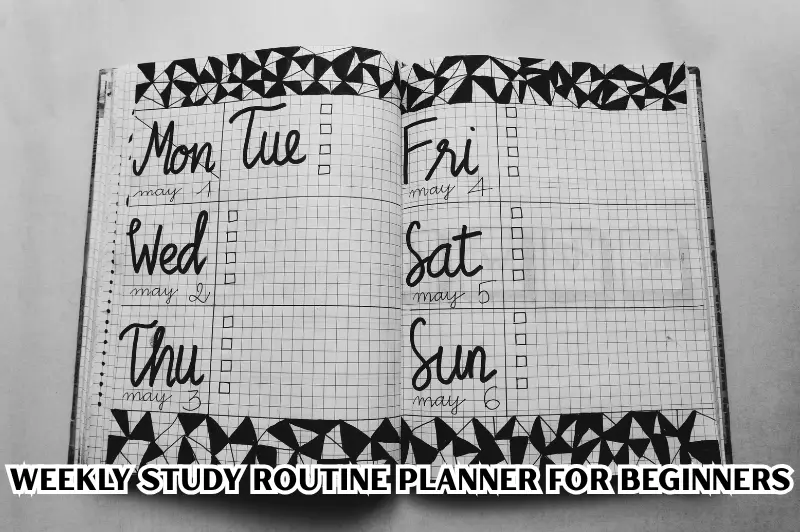
What does an effective study routine look like?
An effective study routine is consistent, realistic, and matched to your personal energy levels and schedule. It doesn’t need to be long — it needs to be repeatable.
Steps to build your routine:
- Identify your most alert hours (morning, afternoon, or evening)
- Choose a fixed time slot each day, even if short
- Start with 25–45 minute focused sessions
- Include short breaks between sessions
- Review what you studied at the end of each week
Consistency matters more than duration. Studying for 30 focused minutes daily often produces better results than a single unfocused five-hour session.
Proven Study Techniques for Beginners
Which Study Guide for Beginners actually work?
Some techniques are backed by decades of learning research and are especially useful for beginners because they’re simple to apply.
Active recall
Instead of re-reading notes, test yourself on the material. This forces your brain to retrieve information, which strengthens memory far more than passive review.
Spaced repetition
Review material at increasing intervals — for example, after one day, then three days, then a week. This prevents forgetting and reduces last-minute cramming.
The Pomodoro Technique
Study in focused blocks (commonly 25 minutes), followed by a 5-minute break. After four cycles, take a longer break. This keeps concentration high and reduces burnout.
Summarizing in your own words
After reading a section, write a short summary without looking at the source. If you struggle, that’s a sign to revisit the material.
Teaching the material
Explaining a topic to someone else — or even out loud to yourself — reveals gaps in understanding quickly.
Organizing Your Study Guide for Beginners
How should beginners organize notes and resources?
Keep materials organized by subject or topic, not scattered across multiple formats. A simple, consistent system saves time later.
- Use one notebook or digital app per subject
- Label sections clearly with dates and topics
- Keep a separate list of questions or doubts to revisit
- Store past tests or practice questions together for review
Digital tools like note-taking apps, flashcard software, and calendar reminders can help, but they aren’t required. A simple notebook and planner work just as well if used consistently.
Time Management Tips for New Learners
How can beginners manage study time without feeling overwhelmed?
Time management starts with prioritization, not perfection. Focus on what matters most first.
- Rank topics by difficulty or exam weight
- Study harder subjects when your energy is highest
- Avoid multitasking — it reduces retention significantly
- Set a timer to avoid losing track of study sessions
- Leave buffer time for review before deadlines
A weekly planner, even a basic one, helps visualize how much time is actually available versus how much is needed.
Common Mistakes Beginners Make While Studying
Recognizing these mistakes early can save significant time and frustration.
- Studying without a plan – Leads to wasted time and unclear progress
- Passive reading only – Re-reading feels productive but rarely improves recall
- Ignoring breaks – Continuous studying reduces focus and increases fatigue
- Ignoring past mistakes – Not reviewing incorrect answers repeats the same errors
- Cramming before deadlines – Increases stress and reduces long-term retention
- Multitasking while studying – Splits attention and weakens understanding
- Not tracking progress – Makes it hard to know what’s actually working
Avoiding these patterns early builds stronger study habits that last beyond the beginner stage.
Benefits and Limitations of Using a Study Guide for Beginners
| Aspect | Benefits | Limitations |
| Structure | Provides clear direction and reduces confusion | Needs occasional adjustment as needs change |
| Time | Saves time by avoiding random studying | Requires initial setup time |
| Motivation | Makes progress visible and trackable | Doesn’t replace consistent effort |
| Flexibility | Can be customized to any subject | Generic guides may need personalization |
A study guide is a tool, not a guarantee. It works best when combined with consistent effort and honest self-review.
Tips to Stay Consistent and Motivated
- Set small, achievable daily targets instead of vague goals
- Track progress visually with checklists or habit trackers
- Reward yourself after completing milestones
- Study with a partner or group occasionally for accountability
- Revisit your “why” — the reason you started — during low-motivation days
Motivation naturally fluctuates. Relying on routine and structure, rather than motivation alone, keeps progress steady even on difficult days.
Digital tools like note-taking apps, flashcard software, and calendar reminders can help, but they aren’t required. A simple notebook and planner work just as well if used consistently. Choosing the right note-taking system also matters — read our full comparison of Best Note-Taking Methods for Students to find what works for you.
A weekly planner, even a basic one, helps visualize how much time is actually available versus how much is needed. If you want to explore time management frameworks further, tools like Todoist can help you plan and track your study schedule effectively.
Frequently Asked Questions
What is the best study method for beginners?
Active recall combined with spaced repetition is widely considered effective for beginners. It involves testing yourself on material and reviewing it at increasing intervals, which strengthens memory better than simply re-reading notes or highlighting text passively.
How many hours should a beginner study each day?
There’s no fixed number — quality matters more than quantity. Starting with 1–2 focused hours daily, broken into shorter sessions, is manageable for most beginners and can be adjusted based on goals, schedule, and subject difficulty over time.
How do I stay focused while studying?
Remove distractions like phone notifications, study in short focused blocks, and take regular breaks. Techniques like the Pomodoro method help maintain concentration. A quiet, dedicated study space also reduces interruptions and improves overall focus.
Is it better to study alone or in a group?
Both have benefits. Studying alone allows deep, distraction-free focus, while group study helps with discussing difficult concepts and staying accountable. Beginners often benefit from combining both — individual study for learning, group sessions for review.
How long does it take to build a good study habit?
Habits typically take several weeks of consistent repetition to feel automatic. Starting small and staying consistent, even with short sessions, matters more than intensity. Tracking daily progress can help reinforce the habit until it becomes routine.
Conclusion
Building strong study habits doesn’t require complicated systems or expensive tools. A clear study guide for beginners focuses on setting realistic goals, building a consistent routine, using proven techniques like active recall and spaced repetition, and staying organized along the way.
Start small: pick one technique from this guide, apply it for a week, and track your progress. Small, consistent steps build the foundation for long-term learning success.

