
Introduction
Budgeting tips for college students can help young adults manage their money, pay essential expenses, avoid unnecessary debt, and build better financial habits. College life often comes with new financial responsibilities, including tuition fees, textbooks, food, transportation, accommodation, and personal expenses. Without a clear plan, even a reasonable amount of money can disappear quickly.
Learning how to budget does not mean giving up everything you enjoy. Instead, it means understanding how much money you have, deciding what matters most, and spending carefully. Whether you receive money from your parents, earn through a part-time job, receive a scholarship, or use student financial aid, a practical budget can help you make better decisions.
This guide explains how to create a college budget, track expenses, reduce everyday costs, save money on a limited income, and avoid common financial mistakes. With consistent effort and a few simple strategies, you can make your money last longer while focusing on your education.
What Is Budgeting for College Students?

Budgeting for college students is the process of planning how to use available money to cover expenses, save for future needs, and avoid unnecessary spending. A student budget compares expected income with regular and occasional expenses to ensure money is available when needed.
For example, a student who receives $800 per month might need to divide that money among groceries, transportation, school supplies, phone bills, entertainment, and savings. Creating a budget makes these responsibilities easier to manage.
A student budget generally includes three main elements:
- Income: Money received from family, employment, scholarships, grants, or other legitimate sources.
- Expenses: Money spent on tuition, rent, food, transportation, books, and personal needs.
- Savings: Money set aside for emergencies, future purchases, or unexpected expenses.
The goal is to make informed spending decisions rather than wondering where your money went at the end of each month.
12 Practical Budgeting Tips for College Students
The best budgeting tips for college students are simple, realistic, and easy to follow throughout the academic year. You do not need a complicated spreadsheet or a high income to start managing your money effectively.
1. Calculate Your Monthly Income
Start by identifying how much money you actually have available each month. Include reliable sources of income and avoid treating uncertain earnings as guaranteed money.
Your income might come from:
- Allowances from parents or family members
- Part-time employment
- Paid internships
- Scholarships or grants designated for living expenses
- Freelance work or tutoring
- Other dependable sources of income
If your earnings change each month, build your budget around a conservative estimate rather than your best month.
For example, if your part-time job pays different amounts each month, use a lower, dependable figure for planning. You can allocate any extra income after receiving it.
Remember that scholarships, grants, and student loans may have specific restrictions. Check whether the funds can be used for living expenses before including them in your spending plan.
2. Track Every Expense
Tracking expenses helps you understand your spending habits and identify opportunities to save. Small purchases may seem insignificant individually, but they can add up over several weeks.
For one month, record everything you spend, including coffee, snacks, transportation, subscriptions, and online purchases.
You can track expenses using:
- A simple notebook
- A spreadsheet
- A budgeting app
- Your bank’s transaction history
- A notes app on your phone
At the end of each week, review your spending. Ask yourself which purchases were necessary, which were optional, and which could have been avoided.
For example, buying a $5 snack five days a week costs approximately $100 over four weeks. Preparing snacks at home could reduce this expense without requiring a major lifestyle change.
The purpose of expense tracking is not to judge yourself. It is to understand your habits and make better choices.
3. Create a Realistic Monthly Budget
A realistic budget gives every dollar a purpose. It should cover essential expenses first, provide some flexibility for personal spending, and include savings whenever possible.
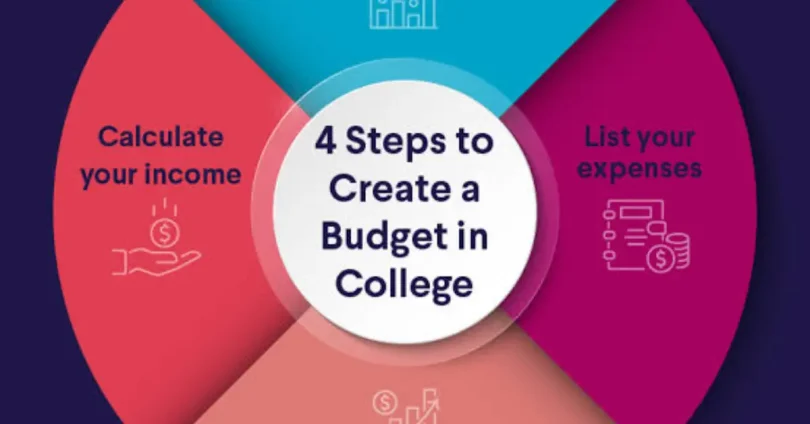
Follow these steps to create your budget:
- Calculate your expected monthly income.
- List essential expenses, including housing, food, transportation, and education.
- Add regular bills and personal expenses.
- Set aside money for savings and emergencies.
- Compare planned expenses with your available income.
- Adjust optional spending if your expenses exceed your income.
Here is an example of a monthly budget for a student with $1,000 available to spend.
| Budget category | Monthly amount |
|---|---|
| Rent and utilities | $350 |
| Groceries | $200 |
| Transportation | $70 |
| Books and supplies | $50 |
| Phone and internet | $40 |
| Personal expenses | $100 |
| Entertainment | $60 |
| Emergency savings | $80 |
| Miscellaneous expenses | $50 |
| Total | $1,000 |
This is an illustrative example, not a recommended budget for every student. Actual costs depend on location, housing arrangements, tuition responsibilities, and access to family support.
If your rent or transportation costs are higher, adjust the categories to reflect your situation. A useful budget should match your real expenses rather than force you into unrealistic limits.
4. Prioritize Needs Over Wants
One of the most effective money management tips for college students is learning to distinguish between needs and wants.
Needs are expenses required for daily living and education. Wants are optional purchases that make life more enjoyable but can usually be postponed.
Common needs include:
- Rent and essential utilities
- Basic groceries
- Transportation to college or work
- Required textbooks and course materials
- Necessary medical expenses
- Essential phone and internet access
Common wants include:
- Frequent restaurant meals
- Expensive clothing
- Unnecessary gadgets
- Premium subscriptions
- Impulse purchases
- Costly entertainment
This does not mean you should eliminate every enjoyable activity. Instead, cover essential expenses first and decide how much you can reasonably spend on wants.
Before buying something optional, ask yourself whether it fits your budget and whether you would still want it after waiting 24 hours.
5. Save Money on Food and Groceries
Food is a regular expense that students can often manage more effectively through planning. Cooking at home, preparing meals in advance, and shopping with a list can reduce unnecessary spending.
Try these practical strategies:
- Plan meals for the week before shopping.
- Prepare breakfast and lunch at home.
- Buy store-brand products when quality and suitability are comparable.
- Compare prices and unit costs between products.
- Use frozen vegetables and other ingredients that last longer.
- Avoid shopping when hungry.
- Check whether your college offers affordable meals or food assistance.
Meal planning can also reduce food waste because you purchase ingredients with specific meals in mind.
For example, rice, beans, eggs, oats, seasonal vegetables, and other affordable staples can form the basis of several inexpensive meals. Choose foods that suit your dietary needs and local prices.
If you live in a dormitory, check whether a meal plan is cheaper than purchasing every meal separately. Compare the total cost and restrictions before making a decision.
6. Buy Used Textbooks and Affordable School Supplies
Textbooks and course materials can create additional financial pressure, particularly when several classes require expensive books.
Before purchasing new materials, check the syllabus and ask your instructor which resources are actually required.
Consider these alternatives:
- Borrow books from the college library.
- Purchase used textbooks from reliable sellers.
- Rent books when the total cost is lower.
- Look for authorized digital editions.
- Check whether your college provides open educational resources.
- Exchange materials with other students.
- Sell eligible books you no longer need.
Always confirm the correct edition and ensure that any required access codes or online materials are included. A cheaper textbook may not be useful if your course requires a separate paid resource.
You can also save on notebooks, pens, folders, and other supplies by purchasing only what you need and reusing items that are still in good condition.
7. Use Student Discounts and Campus Resources
Many businesses and educational institutions provide discounts or services that help students reduce everyday expenses. Availability varies by location, institution, and eligibility requirements.
Check for student pricing on transportation, software, entertainment, technology, museums, and other services.
You may also be able to use campus resources such as:
- Libraries and study spaces
- Computer labs
- Career counseling
- Academic tutoring
- Student health services
- Recreation facilities
- Food assistance programs
- Emergency financial support
Use your official student email or identification when required, and read the terms before signing up for a discounted service.
A discount only saves money when you genuinely need the product or service. Buying something unnecessary simply because it is on sale still increases your expenses.
8. Set Up an Emergency Fund
An emergency fund is money reserved for unexpected expenses rather than everyday purchases. It can help you handle situations such as urgent travel, a necessary laptop repair, an unexpected bill, or a temporary reduction in income.
Start with a small, achievable goal. Even setting aside a few dollars each week can help you establish the habit.
To build your emergency savings:
- Choose a separate savings account or a clearly labeled savings category.
- Set a manageable weekly or monthly target.
- Transfer money when you receive income.
- Use the fund only for genuine unexpected needs.
- Replenish it gradually after making a withdrawal.
If your income is limited, do not neglect food, housing, medication, or other essential expenses just to meet a savings target.
Your first goal might be enough money to cover one common unexpected expense. Once you achieve that, gradually increase the amount according to your circumstances.
9. Avoid Unnecessary Credit Card Debt
Credit cards can help with certain purchases and may offer useful protections, but carrying a balance can lead to interest charges and growing debt.
Students should understand the costs and terms before opening or using a credit card.
Follow these guidelines:
- Read the interest rate and fee information.
- Understand the payment due date and minimum payment.
- Avoid using credit for purchases you cannot reasonably afford.
- Pay the full statement balance by the due date when possible.
- Never ignore overdue bills.
- Contact the card issuer promptly if you cannot make a payment.
Paying only the minimum can leave a balance that continues to accrue interest. The exact cost depends on your card agreement and outstanding balance.
Student loans also require careful planning. Before borrowing, review the amount needed, repayment conditions, interest, and available grants or scholarships. Loans are not free income, and repayment obligations may continue after graduation.
10. Find Affordable Entertainment
College life should include time to relax and connect with friends. You can enjoy these experiences without making expensive activities a regular part of your budget.
Affordable entertainment options include:
- College events and student clubs
- Free community festivals
- Outdoor walks and recreational activities
- Movie nights with friends
- Public parks and museums with free admission
- Student sports events
- Game nights at home
- Group study sessions followed by low-cost activities
Set a monthly entertainment allowance and decide how to use it before the month begins.
For example, you might choose one paid activity and several free activities each month instead of spending money on expensive outings every weekend.
The aim is to balance enjoyment with financial stability. A sustainable budget should allow some flexibility rather than making you feel restricted all the time.
11. Use Budgeting Apps or a Simple Spreadsheet
Budgeting tools make it easier to organize expenses, monitor spending, and understand where your money goes.
A spreadsheet is often enough for beginners. Create columns for the date, expense, category, planned amount, and actual amount.
You can also consider budgeting apps that offer expense categorization, spending alerts, or savings goals. Check their fees, privacy policies, and account-access permissions before connecting financial information.
A simple spreadsheet might look like this:
| Expense | Planned | Actual |
|---|---|---|
| Groceries | $200 | $185 |
| Transportation | $70 | $75 |
| Entertainment | $60 | $45 |
| School supplies | $50 | $40 |
In this example, grocery spending is below the planned amount, while transportation costs are slightly higher. Reviewing these differences helps you make adjustments for the following month.
The best budgeting tool is one you will actually use. A simple system updated regularly is more useful than a complicated app you abandon after a week.
12. Review and Adjust Your Budget Every Month
Your financial needs can change throughout the semester. Textbook purchases, examination periods, travel, rent changes, and changes in work hours may affect your spending.
Review your budget at the end of every month.
Ask yourself these questions:
- Did I spend more than I earned or received?
- Which expenses were higher than expected?
- Did I save anything?
- Were there purchases I could have avoided?
- Do I need to change any spending limits next month?
- Are upcoming fees or bills likely to affect my budget?
If you repeatedly overspend in one category, investigate the reason instead of simply setting a stricter limit.
For example, if transportation costs increase because your schedule changes, you may need to adjust the budget or compare alternative travel options.
A budget is a flexible plan, not a permanent rulebook. Regular reviews help keep it realistic.
How to Create a College Student Budget Step by Step
Creating a budget becomes easier when you follow a clear process. You can start with paper, a spreadsheet, or a budgeting app.
Step 1: Calculate Your Available Money
Add the money you can reliably use during the month. If you receive financial aid in a lump sum, account for when the funds arrive and which expenses they must cover.
Do not count restricted funds as freely available spending money.
Step 2: List Your Fixed and Variable Expenses
Fixed expenses generally remain similar each month, while variable expenses change according to usage or circumstances.
| Fixed or regular expenses | Variable expenses |
|---|---|
| Rent | Groceries |
| Phone plan | Transportation |
| Insurance payments | Entertainment |
| Subscription fees | Personal purchases |
| Regular loan payments | Some school supplies |
Some expenses, such as utilities, can fall between these categories because the amount may change each month.
Step 3: Set Spending Limits
Allocate enough money for essential expenses first. Then decide how much you can afford to spend on optional purchases and savings.
Your limits should reflect actual prices and income. If your expenses exceed your available funds, focus on reducing flexible costs and investigating legitimate support options.
Step 4: Plan for Irregular Expenses
Not every expense happens monthly. You may need to pay for semester fees, annual subscriptions, travel home, clothing, or equipment repairs.
Estimate these costs in advance and set aside money when possible.
For example, if a predictable expense costs $240 every six months, setting aside $40 each month can make the payment easier to manage.
Step 5: Monitor Your Progress
Check your spending at least once a week. This gives you time to adjust before the money allocated to a category runs out.
At the end of the month, compare your actual spending with your plan and use what you learn to improve the next budget.
Which Budgeting Method Is Best for College Students?
The best budgeting method depends on your income, expenses, and personal preferences. Students with limited or irregular income may need a more flexible approach than those with predictable monthly earnings.
The 50/30/20 Budget Rule
The 50/30/20 rule is a budgeting guideline that divides after-tax income into three categories:
- 50% for needs
- 30% for wants
- 20% for savings and debt repayment
For example, with $1,000 in monthly after-tax income, the suggested allocation would be $500 for needs, $300 for wants, and $200 for savings and debt repayment.
However, these percentages are not suitable for every college student. Rent, tuition, food, and transportation can consume more than half of a student’s available income. Treat the rule as a starting point rather than a requirement.
The Zero-Based Budget
A zero-based budget assigns every dollar of available income to a category, such as bills, food, savings, or personal spending.
The goal is for income minus planned allocations to equal zero. This does not mean spending all your money; savings and emergency funds are also budget categories.
This approach works well for students who want detailed control over their spending.
The Envelope Budgeting Method
The envelope method divides money into spending categories, each with a set limit. You can use physical envelopes for cash or separate categories in a spreadsheet or budgeting app.
For example, you might allocate specific amounts for groceries, transportation, and entertainment. When a category reaches its limit, you pause optional spending in that category or deliberately adjust the plan.
This method can make spending limits easier to understand, although it requires regular monitoring.
Common Budgeting Mistakes College Students Should Avoid
Even students with good intentions can make budgeting mistakes. Recognizing these problems early makes it easier to protect your money.
Ignoring Small Purchases
Frequent snacks, delivery fees, coffee, and online purchases may appear inexpensive, but their combined cost can become substantial.
How to avoid it: Track small purchases along with major expenses. Look at the monthly total before deciding whether a spending habit needs to change.
Creating an Unrealistic Budget
A budget that allows too little for groceries, transportation, or other essential costs is difficult to maintain.
How to avoid it: Base your limits on real prices and previous spending. Make gradual adjustments instead of cutting every flexible expense at once.
Forgetting Irregular Bills
Semester fees, repairs, and annual payments can disrupt an otherwise balanced budget.
How to avoid it: Review upcoming expenses and spread predictable costs across the months before they are due.
Depending on Credit Cards for Everyday Needs
Using credit to cover regular expenses without a repayment plan can increase financial pressure.
How to avoid it: Review your income and expenses, investigate student assistance where available, and understand borrowing costs before taking on additional debt.
Failing to Save Anything
Students sometimes postpone saving until they earn more money. However, even a small amount can help build a useful habit.
How to avoid it: Choose an affordable savings target. If you cannot save this month because essential costs use all your income, focus on financial stability first and revisit your goal later.
Giving Up After One Bad Month
An unexpected expense or overspending does not mean budgeting has failed.
How to avoid it: Identify what happened, update your plan, and continue. Consistency matters more than following a budget perfectly every month.
How Can College Students Save Money on a Low Income?
Students with limited income can still improve their financial situation by concentrating on the expenses they can control and using available support.
Start with these practical steps:
- Review housing costs. If safe and practical, compare shared accommodation, campus housing, or commuting from home.
- Reduce food waste. Plan meals, use leftovers safely, and purchase groceries based on a shopping list.
- Use free educational resources. Check libraries, open educational materials, and college-provided software.
- Compare transportation options. Student passes, public transit, cycling, walking, or carpooling may reduce costs where available.
- Review subscriptions. Cancel services you rarely use and avoid duplicate memberships.
- Explore financial support. Ask the college financial aid office about scholarships, grants, emergency funds, and eligible student employment.
- Consider flexible work. Tutoring, campus employment, or appropriate freelance work may provide additional income if they fit around your studies.
Do not assume that every student can reduce expenses indefinitely. Some costs, especially rent, tuition, and healthcare, may be difficult to change.
When income is insufficient to cover basic needs, seek assistance rather than relying on extreme cutbacks or expensive borrowing.
Benefits of Budgeting for College Students
A well-planned student budget offers several practical benefits beyond simply spending less money.
Better Control Over Spending
Budgeting shows where your money goes and helps you make informed decisions before purchasing something.
Less Financial Uncertainty
Knowing when bills are due and how much money is available can make financial responsibilities easier to manage.
Improved Saving Habits
Regularly setting aside even small amounts helps you prepare for predictable expenses and unexpected needs.
Reduced Risk of Unnecessary Debt
A realistic spending plan can help you identify shortfalls early, compare alternatives, and avoid borrowing for avoidable purchases.
More Focus on Education
Organizing finances can reduce the time and attention spent dealing with preventable money problems.
Stronger Financial Skills After Graduation
Learning to track spending, compare costs, save, and evaluate borrowing can help you manage rent, bills, employment income, and other responsibilities after college.
Limitations of Budgeting: What Students Should Understand
Budgeting is a useful financial tool, but it cannot solve every money problem.
If tuition, housing, or essential living costs exceed your available income, tracking expenses alone will not close the gap. You may need to explore financial aid, lower-cost housing, additional income, payment plans, or support from your institution.
Unexpected events can also make a budget inaccurate. A medical expense, reduced work hours, or family emergency may require immediate changes.
Students should therefore treat budgeting as a planning and decision-making tool rather than a guarantee of financial security. The aim is to make the best possible use of available resources while recognizing when additional support is needed.
Frequently Asked Questions
1. What Are the Best Budgeting Tips for College Students?
The best budgeting tips for college students include tracking every expense, creating a realistic monthly budget, prioritizing essential needs, cooking at home, buying used textbooks, using student discounts, and setting aside emergency savings. Review your spending regularly and adjust your plan when your income or expenses change.
2. How Much Money Should a College Student Save Each Month?
The right savings amount depends on your income, living expenses, and financial responsibilities. Some students may be able to save 10% or 20% of their income, while others may only manage a small amount. Start with an affordable target and prioritize essential expenses before increasing your savings.
3. What Is the 50/30/20 Budget Rule for Students?
The 50/30/20 rule suggests allocating 50% of after-tax income to needs, 30% to wants, and 20% to savings and debt repayment. It can provide a useful starting point, but students with high housing or education costs may need different percentages. Adapt the method to your actual financial situation.
4. How Can College Students Manage Money With No Job?
Students without a job can start by listing dependable sources of financial support, tracking expenses, and prioritizing essential needs. They can explore eligible scholarships, grants, campus assistance, and other legitimate support programs. A budget helps organize available funds, but students facing a shortfall in basic needs should seek additional assistance.
5. Is a Budgeting App Necessary for College Students?
No, a budgeting app is not necessary. A notebook or spreadsheet can work just as well if you update it regularly. Budgeting apps may offer automatic transaction tracking and spending alerts, but check their fees and privacy policies. Choose the method that makes tracking your income and expenses easiest.
Conclusion
Budgeting tips for college students are most effective when they are practical, flexible, and based on real financial circumstances. By tracking expenses, planning monthly spending, reducing unnecessary purchases, using student resources, and building emergency savings when possible, you can make better use of the money available to you.
You do not need a perfect budget to make progress. Start by calculating your monthly income and listing your essential expenses. Choose one or two spending habits to improve, set a realistic savings goal, and review your progress each week.
Your next step: Create a simple monthly budget today. Knowing how much money you have, where it needs to go, and what you can reasonably save is the foundation of stronger financial habits throughout college and beyond.